|
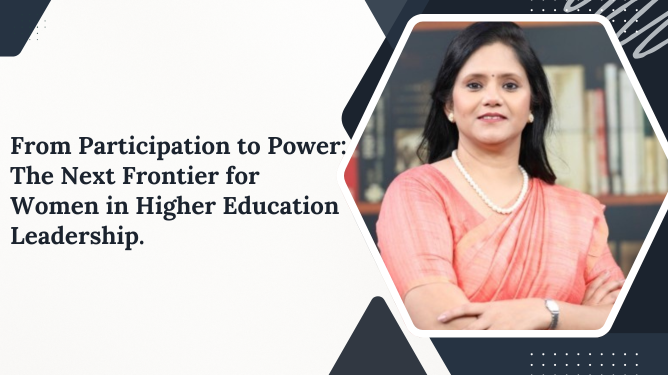
Ms. Shruti Swaroop
Founder & CEO, Embrace Consulting, Gurugram, Haryana |
Indias educational sector has experienced a tremendous change in the past few years. Nowadays, a significantly higher number of students entering different institutions across professions are women. There has been an increase in the number of women entering institutions to become researchers, scholars, and faculty members. However the gap still exists as women representation in the leadership and decision making positions is comparatively low. For institutions and organizations, striving for quality, equality, and equity, closing this gap is the next challenge.
Womens involvement in colleges and universities has increased, which is both positive and progressive. Thousands of brilliant women are presently enrolled in colleges to pursue advanced degrees, contribute to study, and impact the scholarly environment of academic institutions. However, women continue to be lacking in positions of authority in colleges and universities, including chairmen, faculty members of governing bodies, and institution leaders. This difference draws attention to a structural problem in the educational environment: although entry-level opportunities have increased, management paths have not changed as quickly.
The ongoing existence of social and institutional obstacles is one of the reasons for this gap. Academic management pipelines often depend on traditional promotion processes, professional connections, and managerial backgrounds that have traditionally benefited men. Blending academic development with expectations from society and caregiver duties frequently creates more obstacles for female faculty members. Although being outside of education, these factors impact career choices and can delay or limit opportunities for management.
Institutions must take a thoughtful and planned strategy for leadership development so as to close this gap. Institutions need to understand that inclusive leadership is a driver to better management, creativity, and academic achievement instead of just a representation problem. Diverse leadership contributes to broader perspectives, kinder decision-making processes, and improved institutional durability, based on multiple researches conducted globally.
With the intent to nurture future female leaders in education, sponsorship and coaching are of utmost importance. Mentoring enables scholars to grow, boost confidence, and motivation to take up administrative responsibilities. Apart from this, promoting women participation in policy and governance forums are some other ways by which senior academic administrators can make an important contribution to the cause of increasing gender diversity. The confidence, administrative ability, and strategic thinking skills required for leadership positions can easily be developed through organized leadership development programs created especially for females.
In order to promote womens progress in their careers, institutional rules must be modified as well. Flexible work schedules, fair workload distribution, transparent promotion tracks, and encouraging research ecosystems can have a significant positive impact. High achieving female scholars are more likely to advance in their career in the institutions that promotes and implement family-friendly policies, such as flexible tenure clocks, childcare support, and inclusive settings for work.
The function of institutional culture is equally important. Opportunities for leadership should not be limited to formal positions of administration. Research centers, educational groups, teams, and innovation programs must all be led by women. By offering transparency as well as experience in leadership settings, these platforms not only strengthen institutional governance but also educate future leaders.
National initiatives and policy frameworks may accelerate this change even more. Theres a chance of implementing gender-inclusive leadership practices across universities in Indias changing higher education setting, which is fueled by changes that emphasize innovation, and global competitiveness. Establishing circles of female academic leaders, creating leadership fellowships for female scholars, and encouraging institutions to track and share gender representation data that can help foster the development of a stronger leadership pipeline.
In the end, expanding female leadership in higher education is an institutional necessity rather than just a gender issue. Universities are the centers of learning where future leaders grow. Institutions can enhance their commitment to diversity, equality, and intellectual excellence by ensuring that women move from participation to positions of influence and authority.
Thus, the following phase of Indias higher education growth requires to focus on empowering women on campus to realize the leadership potential they have. Institutions that promote inclusive leadership environments enable talented female researchers to take part in academics and shape its course. By doing this, institutions will become equitable for both men and women and the standard of educational leadership will be enhanced and shaped for generations to come.
Devansh Kaushal
Social Media Consultant
Latest Posts
-
 6th August, 2026
 -
 3rd August, 2026