|
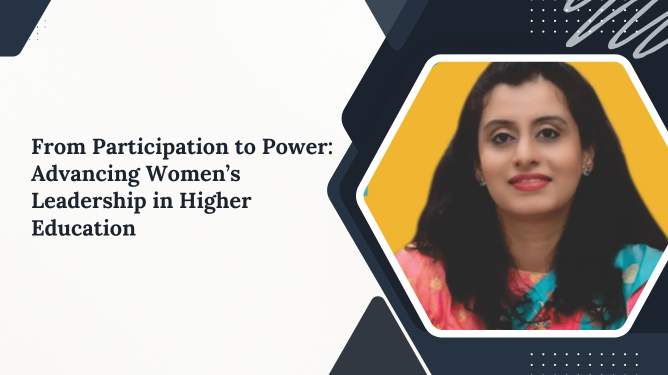
Prof. (Dr.) Geetali Tilak
Vice Chancellor, Tilak Maharashtra Vidyapeeth, Pune, Maharashtra |
"There is no tool for development more effective than the empowerment of women."
— Kofi Annan
The setting of higher education in India has witnessed a remarkable transformation in recent decades, particularly in terms of womens participation. Today, women are not only accessing higher education in greater numbers but are also excelling as scholars, researchers, and educators. In fact, women now constitute nearly half of the total enrolment in higher education in India. This progress reflects a positive shift toward inclusivity and empowerment. However, a critical question remains how do we ensure that this participation translates into positions of leadership and decision-making?
Despite their growing presence, women continue to be underrepresented in senior leadership roles such as Vice-Chancellors, Deans, Directors, and institutional policymakers. This gap between participation and power highlights the need for a conscious and structured effort to enable women to move into leadership positions within academia. As a Vice-Chancellor, I strongly believe that the journey from access to authority must be supported by both institutional commitment and cultural transformation.
My own journey in higher education has reinforced my belief that education is not merely a pathway to success it is a force that transforms identity, purpose, and possibility. Over the years, I have witnessed how women, when given the right opportunities and encouragement, emerge not only as capable professionals but as visionary leaders who bring empathy, resilience, and innovation into institutional spaces.
Women, by their many lived experiences, often develop exceptional abilities in multitasking, time management, and adaptability. Balancing multiple roles professional, personal, and social they cultivate resilience, discipline, and an inherent capacity to manage complexity with efficiency. These strengths are not merely personal attributes but powerful leadership qualities. Equally important is the growth of independent thinking and decision-making among women. Higher education enables women to take informed decisions, assert their perspectives, and actively participate in financial and institutional responsibilities, thereby strengthening their role as confident and capable leaders.
One of the key challenges lies in addressing the structural and societal barriers that limit womens advancement. Unconscious biases, limited access to leadership networks, and the persistent expectation of balancing professional and personal responsibilities often act as constraints. Additionally, in todays rapidly evolving academic landscape, the gender gap in digital access and emerging technologies such as artificial intelligence presents a new challenge that must be addressed proactively. Therefore, higher education institutions must move beyond traditional frameworks and actively create enabling environments that support womens leadership aspirations.
At Tilak Maharashtra Vidyapeeth, we have consistently emphasized inclusive growth and holistic development. We recognize that leadership is not merely about authority but about responsibility, vision, and the ability to inspire change. We have consciously worked toward creating inclusive academic spaces through skill-based programmes, mentorship initiatives, and interdisciplinary opportunities that empower women to lead with confidence and competence.
Mentorship plays a pivotal role in shaping future leaders. Establishing structured mentorship programs that connect experienced academicians with emerging women professionals can significantly enhance confidence, capability, and career progression. Additionally, leadership training initiatives focused on decision-making, strategic planning, and policy engagement can equip women with the necessary tools to navigate complex institutional environments.
Policy interventions are equally crucial. Institutions must adopt transparent and equitable systems for recruitment, promotion, and leadership appointments. Gender-sensitive policies, including flexible work arrangements and supportive infrastructure, can help address the challenges faced by women professionals. Such measures not only promote equity but also strengthen institutional effectiveness by ensuring diverse perspectives in leadership.
The National Education Policy 2020 provides a strong and transformative framework for advancing gender equity in higher education. Its emphasis on inclusivity, multidisciplinary learning, and creates meaningful opportunities to bridge long-standing disparities. By integrating these principles into institutional practices, universities can actively create pathways for women to assume leadership roles across academic, administrative, and research domains.
Another important dimension is the need to redefine leadership itself. Contemporary leadership requires empathy, collaboration, adaptability, and ethical decision-making qualities that women often bring to the forefront. Globally, institutions are increasingly recognizing that gender-inclusive leadership enhances innovation, strengthens decision-making processes, and contributes to sustainable institutional growth. Recognizing and valuing these attributes can transform academic cultures and foster more inclusive ecosystems.
Furthermore, visibility and representation are powerful catalysts for change. Celebrating the achievements of women leaders and providing platforms for their voices can inspire the next generation to aspire toward leadership roles. When young women see themselves reflected in positions of authority, it strengthens their confidence and ambition, creating a cycle of empowerment.
Everything considered, the transition from participation to power is both a challenge and an opportunity for higher education in India. It calls for a collective commitment to creating inclusive ecosystems, strengthening support structures, and promoting equitable leadership pathways. Let this not remain a matter of discussion alone; let us commit to measurable goals greater representation of women in leadership, equitable access to research opportunities, and institutional cultures that actively nurture inclusion.
Empowering women in leadership is not merely a matter of representation; it is essential for innovation, resilience, and the overall progress of our academic institutions. As we move forward, we must build environments where women are not only participants but also decision-makers, visionaries, and leaders shaping the future of higher education.
"Leadership is not about gender; it is about vision, courage, and the ability to transform institutions through inclusive thinking."
Latest Posts
-
 6th August, 2026
 -
 3rd August, 2026